

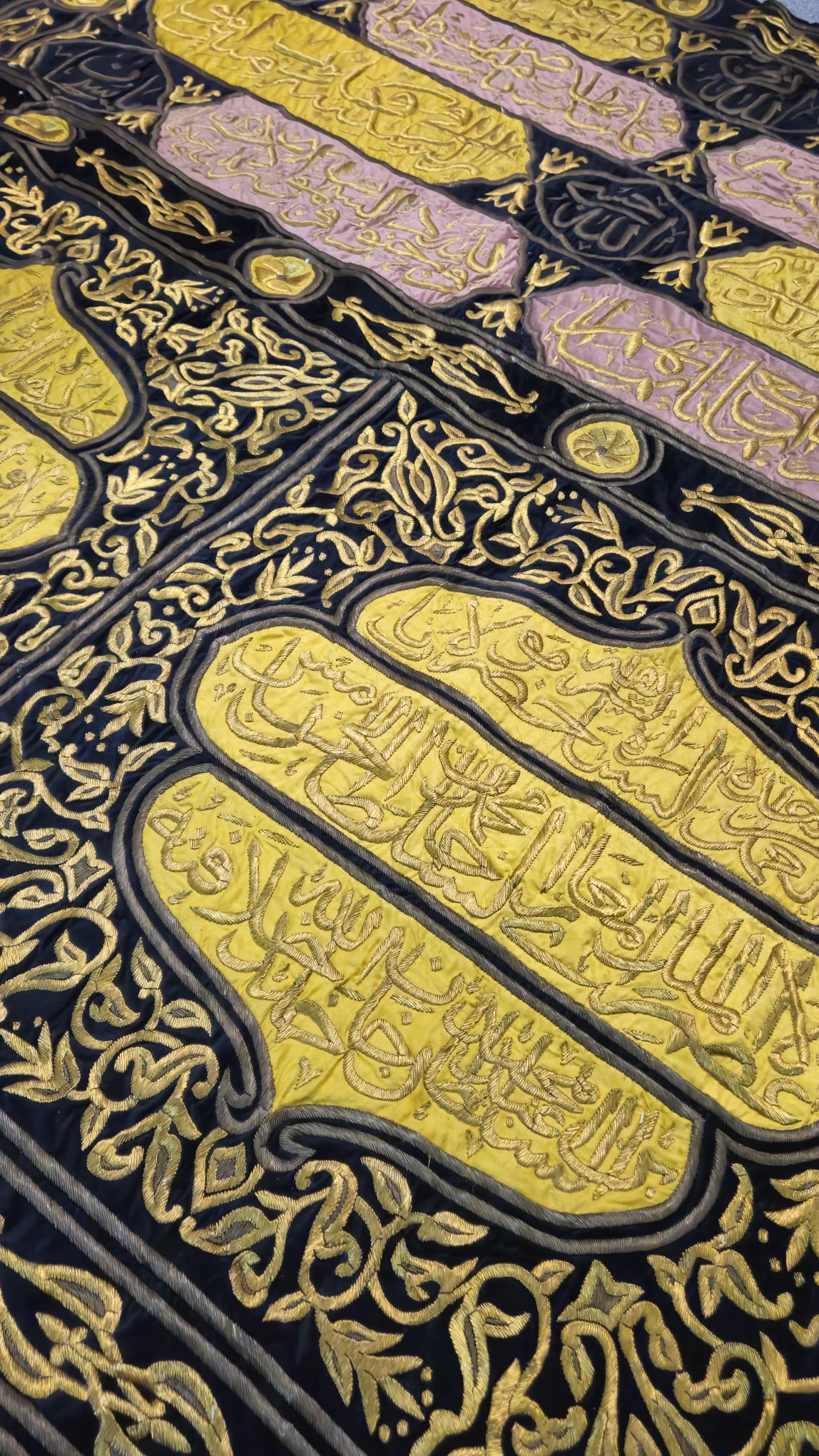

HOLY KAABA DOOR COVER 1311 HIJRI / 1893/1894 CE
This ornate door cover (Sitara) of the Holy Kaaba dates back to 1311 Hijri (1893–1894 CE), during the reign of Ottoman Sultan Abdul Hamid II
It represents the exquisite craftsmanship and deep spiritual reverence of the late Ottoman era, a time when the care and adornment of the Holy Kaaba remained a central duty of the Caliphate
The door cover is made from black silk, richly embroidered with silver and gold threads, crafted with precision to highlight intricate Qur’anic inscriptions, the Shahadah (testimony of faith), and praises for Allah SWT and the Prophet Muhammad SAW
Silver and gold-plated wires (Zari) were imported primarily from India and Europe, while the silk was often sourced from Egyptian or Syrian regions
Sultan Abdulhamid II was the 34th Sultan of the Ottoman Empire and one of its last powerful rulers. He ascended the throne following the deposition of Sultan Murad V. His reign is notable for:
Maintaining Ottoman control over the Holy Cities of Makkah and Madinah. The Ottoman Sultans held the role of Custodian of the Two Holy Mosques, overseeing the maintenance, Kiswah, and ceremonial adornments of the Kaaba and Prophet’s ﷺ Chamber
Commissioning religious textiles and Kiswahs, including door covers, interior and exterior Kiswah panels, and other sacred ceremonial items
Reforms and modernization efforts, including telegraph networks, railways, and educational initiatives, while balancing conservative Islamic governance
Centralized administration and oversight of the Hijaz region, ensuring the sanctity and protection of the Kaaba and the Prophet’s chamber
أَمَرَ بِعَمَلِ هٰذِهِ السِّتَارَةِ الشَّرِيفَةِ حَضْرَةُ مَوْلَانَا الأَعْظَمُ المَلِكُ المُغَازِي السُّلطَانُ مُحَمَّدُ خَانُ الخَامِسُ ابْنُ السُّلطَانِ عَبْدِ المَجِيد خَان أَخْرَ أَخْلَدَ اللهُ خِلَافَتَهُ
“By command for the making of this noble curtain of His Presence, our most exalted master, the warrior king Sultan Hamid Khan V, son of Sultan Abdul Majid Khan, May Allah perpetuate his Khilafat Ameen.”
