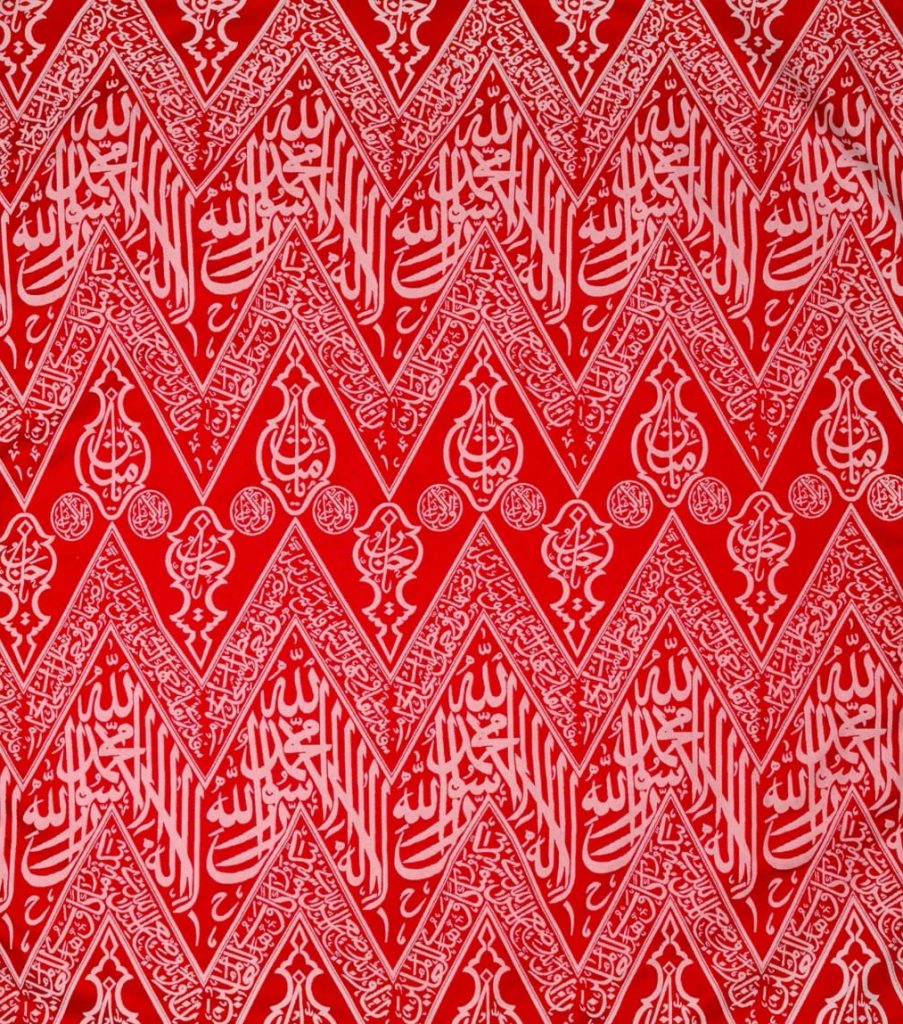
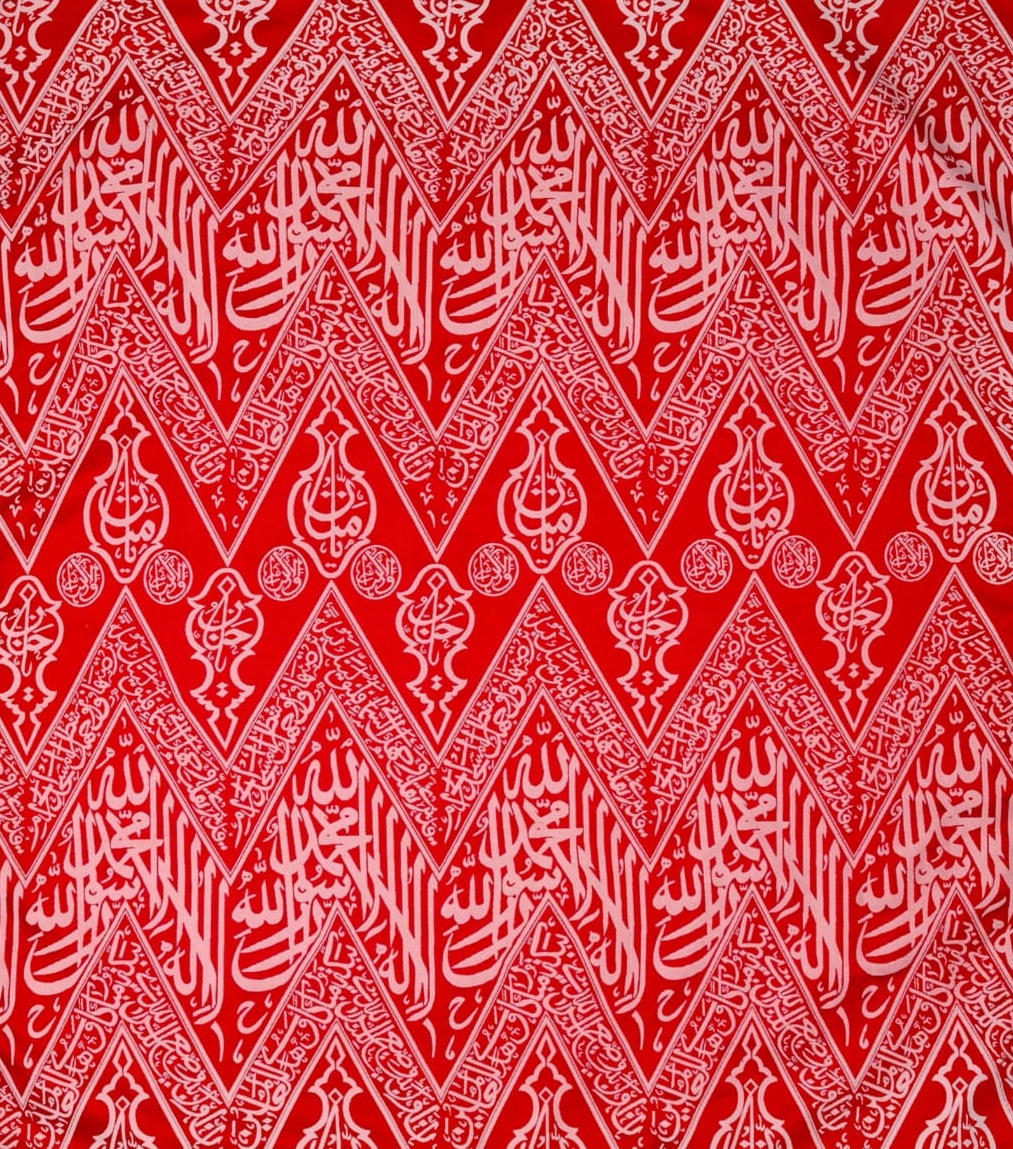
The red Kiswa al-Dākhiliyyah is the textile that covers the interior walls of the Holy Kaaba, distinct from the black Kiswah that covers the exterior. It lines the inner walls from floor to ceiling. Beneath it, the interior walls of the Kaaba are clad in marble.
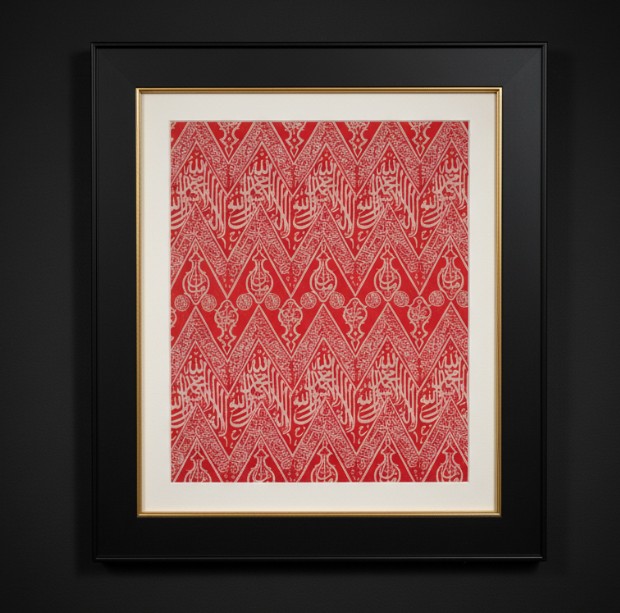
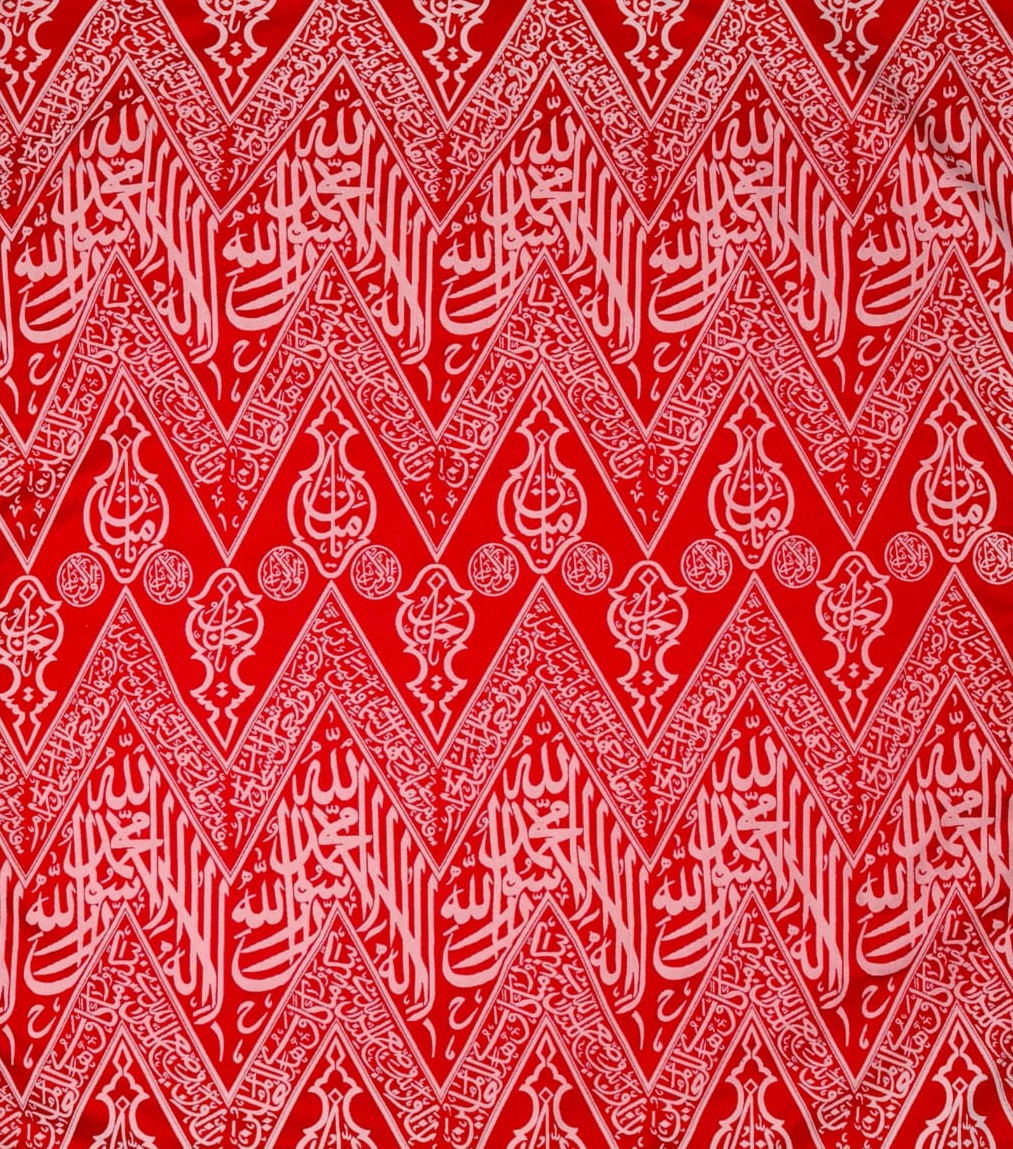
This fragment originates from the inner curtain that once adorned the interior of the Kaaba. It is woven in silk, featuring a decorative chevron pattern with repeated inscriptions. The textile includes the Kalimat al-Tawhid (“Lā ilāha illa Allāh, Muhammad Rasūl Allāh”) woven along a central band. Additional devotional inscriptions and Qur’anic verses are incorporated into the design
During the Ottoman period (1517–1916), the Kiswa of the Kaaba was produced under imperial patronage and sent annually to Makkah. After replacement, sections of the previous Kiswah were sometimes distributed as gifts. Comparable fragments from the same period are preserved in major museum collections, including the Victoria and Albert Museum (London), The Metropolitan Museum of Art (New York), and The David Collection (Copenhagen)