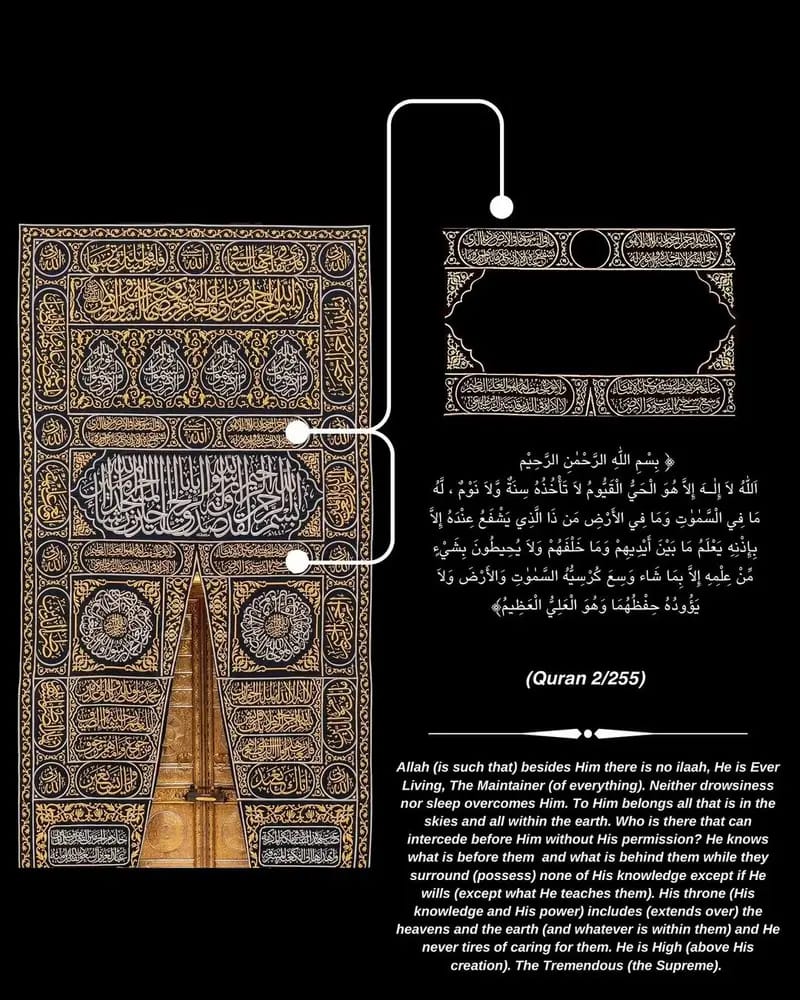
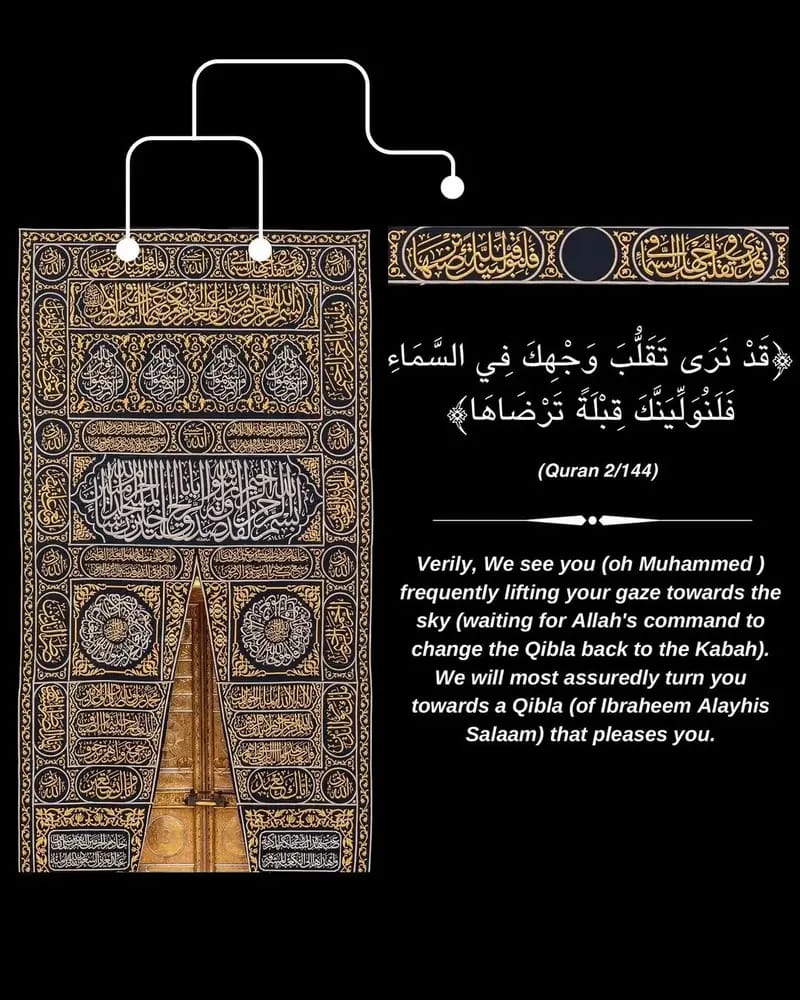
The Holy Kaaba door cover (Sitara al-Bāb) is one of the most magnificent and spiritually significant elements of the Kiswa. Placed over the blessed door of the Kaaba, it is richly woven from the finest black silk and intricately embroidered with Qur’anic verses using threads of pure gold and silver. Its purpose is both symbolic and honorific — to dignify and beautify the sacred entrance of the House of Allah, the most revered structure in Islam. The calligraphy, often featuring verses about Tawḥīd, the Shahadah, and supplications, reflects the majesty and sanctity of the Kaaba. Every detail — from the precision of the stitching to the luminous gold embroidery — embodies centuries of devotion, craftsmanship, and reverence, making it not just a textile, but a sacred work of Islamic art and heritage
Abdul Rahim Amin (عبد الرحيم أمين بخاري) — Calligrapher of the Kaaba’s Kiswah
Abdul Rahim Amin (full name often given with Bukhari to indicate his Meccan origin) was a prominent Saudi Arabian calligrapher and artist renowned for his role in crafting the inscriptions and artistic lettering seen on the Holy Kaaba’s Kiswa and door cover
He was born in Mecca in 1335 AH / 1917 CE and developed a talent for Islamic calligraphy and design from a young age. He joined the Dar al-Kiswah (Kiswa Factory) in Ajiad in the early 20th century, where he trained and worked on the artistic production of the kiswa
Over decades, Abdul Rahim Amin became a leading figure in designing the Thuluth script and decorative motifs used on the cloth that covers the Kaaba, as well as on its door panels and embroidered elements. He was involved in inscribing Qur’anic verses and ornamental calligraphy that have become iconic parts of the annual kiswa design. �
He also executed the lettering on the first modern door of the Kaaba commissioned by King Abdulaziz and later on the door made in the reign of King Khalid. �
Because of his significant contributions to the sacred art and tradition, King Faisal bin Abdulaziz Al Saud ordered that his name be included on the kiswa itself, and to this day his name continues to appear on the ceremonial covering, preserving his legacy in Islamic art
Abdul Rahim Amin passed away in 1418 AH, but his artistic imprint remains visible each year with the replacement of the Kaaba’s kiswa, admired by pilgrims and visitors from around the world
The modern Kiswa is made from natural silk dyed black, a tradition that dates back many centuries. While the Kaaba was historically covered in various colours (including white, red, and green in earlier Islamic periods), black became the established and enduring colour from the Abbasid era (8th–9th century CE) and has remained the standard ever since
The black colour serves several purposes:
- Symbolic dignity and solemnity, reflecting reverence and majesty.
- Visual contrast, allowing the Qur’anic inscriptions in gold and silver thread to stand out clearly.
- Continuity of tradition, as successive Islamic rulers maintained the established black covering.
Today, the silk is specially woven and dyed at the King Abdulaziz Complex for the Holy Kaaba Kiswa in Makkah, ensuring uniform depth of colour and durability.
Pollution and Environmental Impact
In the modern era, air pollution, dust, humidity, and the high volume of pilgrims significantly affect the Kiswa’s surface. Millions of visitors touch the cloth annually, particularly around the door area, which leads to:
- Visible wear and fading
- Accumulation of dust and oils from hands
- Slight discoloration over time
- Urban pollution and environmental exposure also contribute to surface dullness
For this reason, the Kiswah is replaced annually on the 9th of Dhul-Hijjah, ensuring preservation of its dignity and condition.
Gold and Silver Embroidery
The Qur’anic verses and inscriptions are embroidered using:
Silver threads plated with 22-carat gold
Pure silver threads for specific detailing
The process involves:
- Printing the calligraphy onto the silk.
- Hand-embroidering the designs using raised stitching techniques.
- Applying gold-plated silver wire over cotton padding to create a three-dimensional effect.
This intricate craftsmanship gives the inscriptions their distinct brilliance and prominence, especially visible on the door curtain (Sitārah/Burqʿah), which contains the most elaborate embroidery
Arabic
خَادِمُ الْحَرَمَيْنِ الشَّرِيفَيْنِ فَهْدُ بْنُ عَبْدِ الْعَزِيزِ آلِ سُعُودٍ تَقَبَّلَ اللَّهُ مِنْهُ
English Translation
‘’Custodian of the Two Holy Mosques, Fahd bin Abdulaziz Al Saud — may Allah accept from him.”
Arabic
صُنِعَ هٰذِهِ السِّتَارَةِ فِي مَكَّةَ المُكَرَّمَةِ وَأُهْدِيَ إِلَى الكَعْبَةِ المُشَرَّفَةِ
English Translation
‘’This curtain was made in Makkah Al Mukarramah and was presented to the Noble Kaaba’’