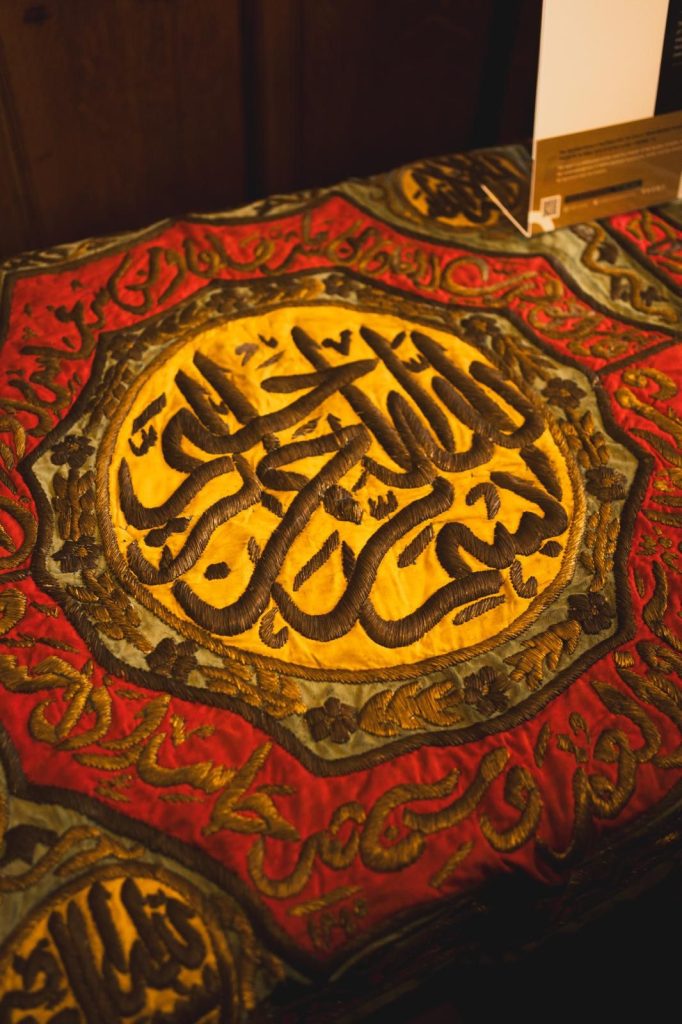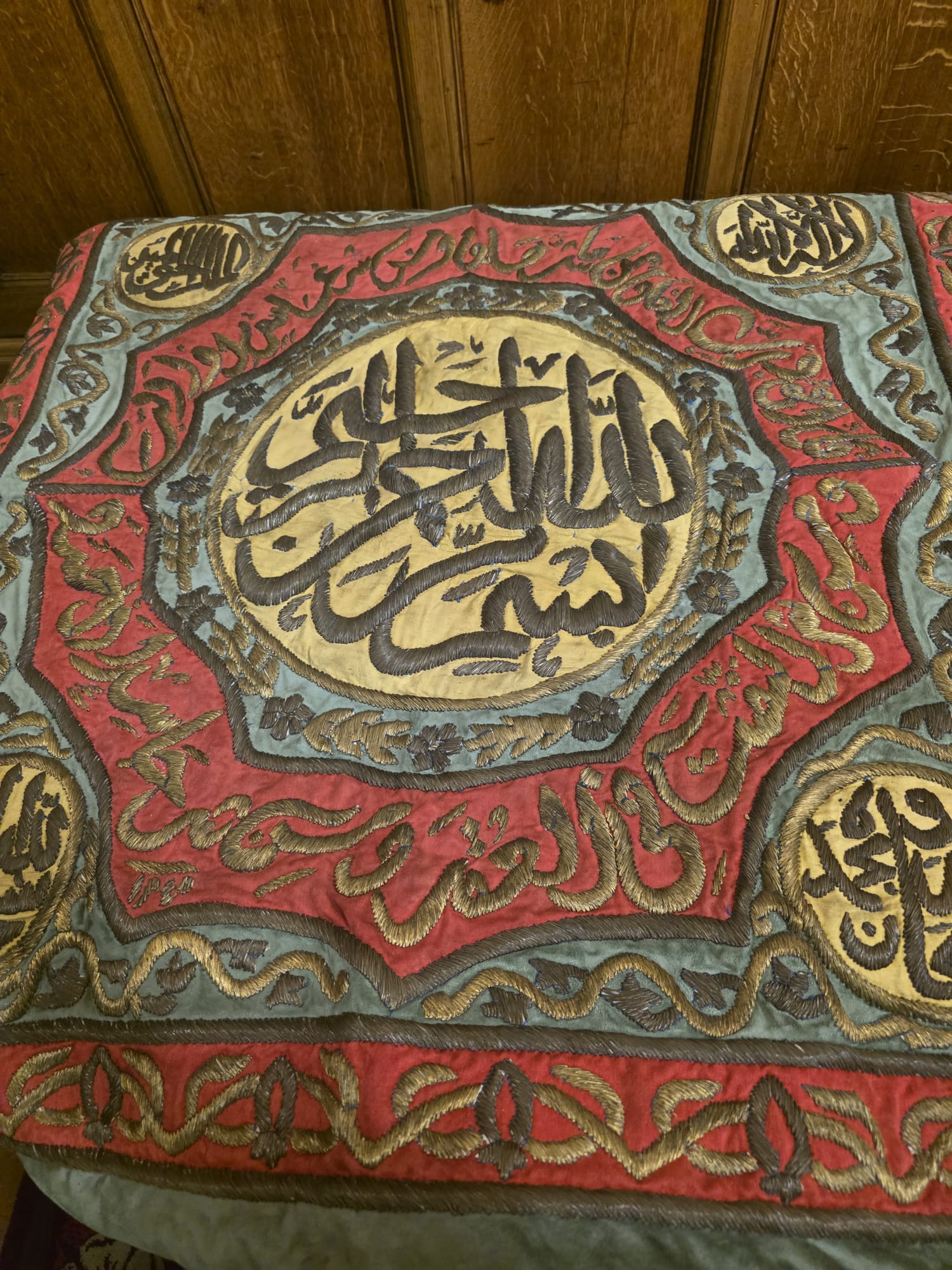
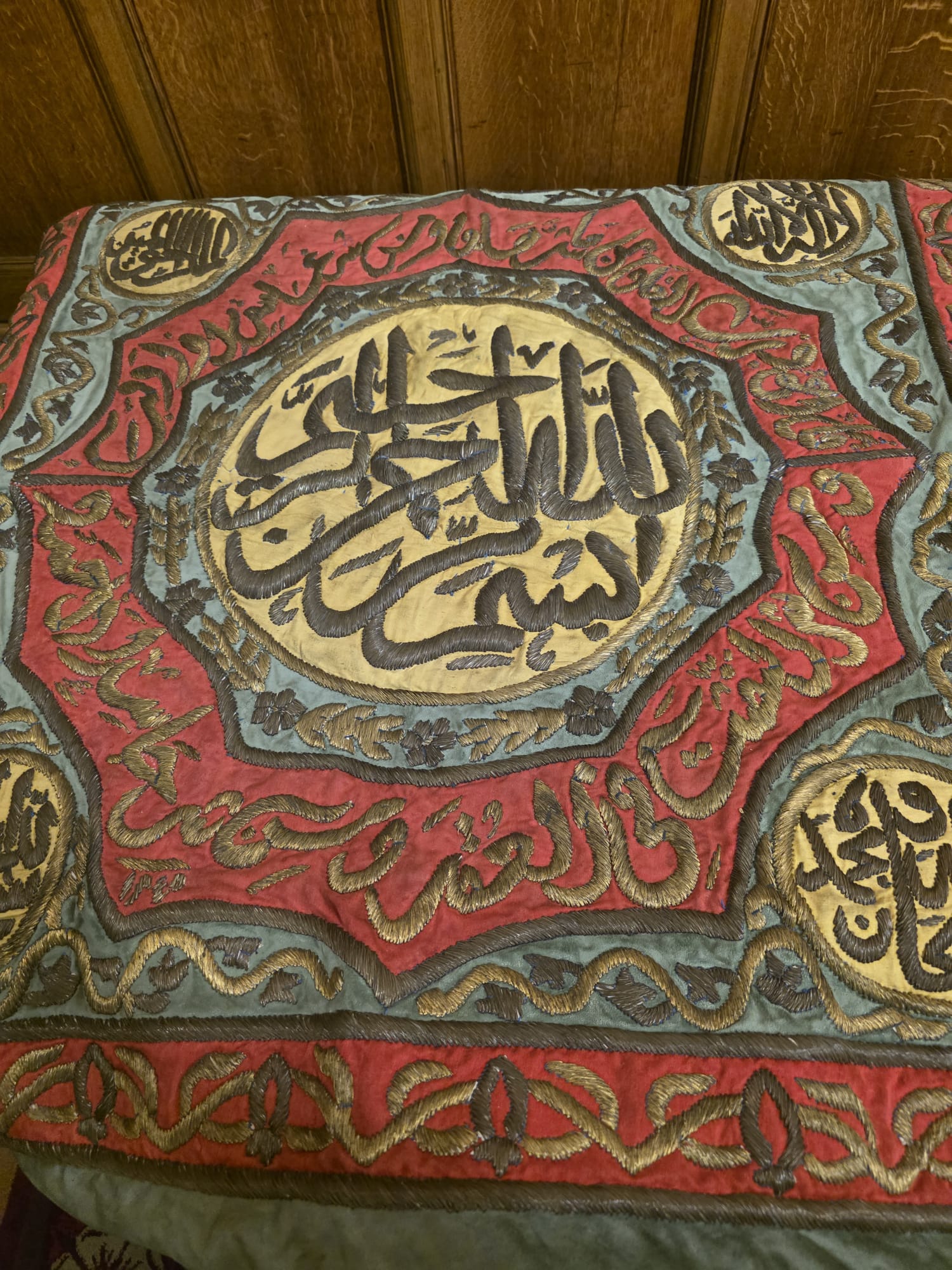
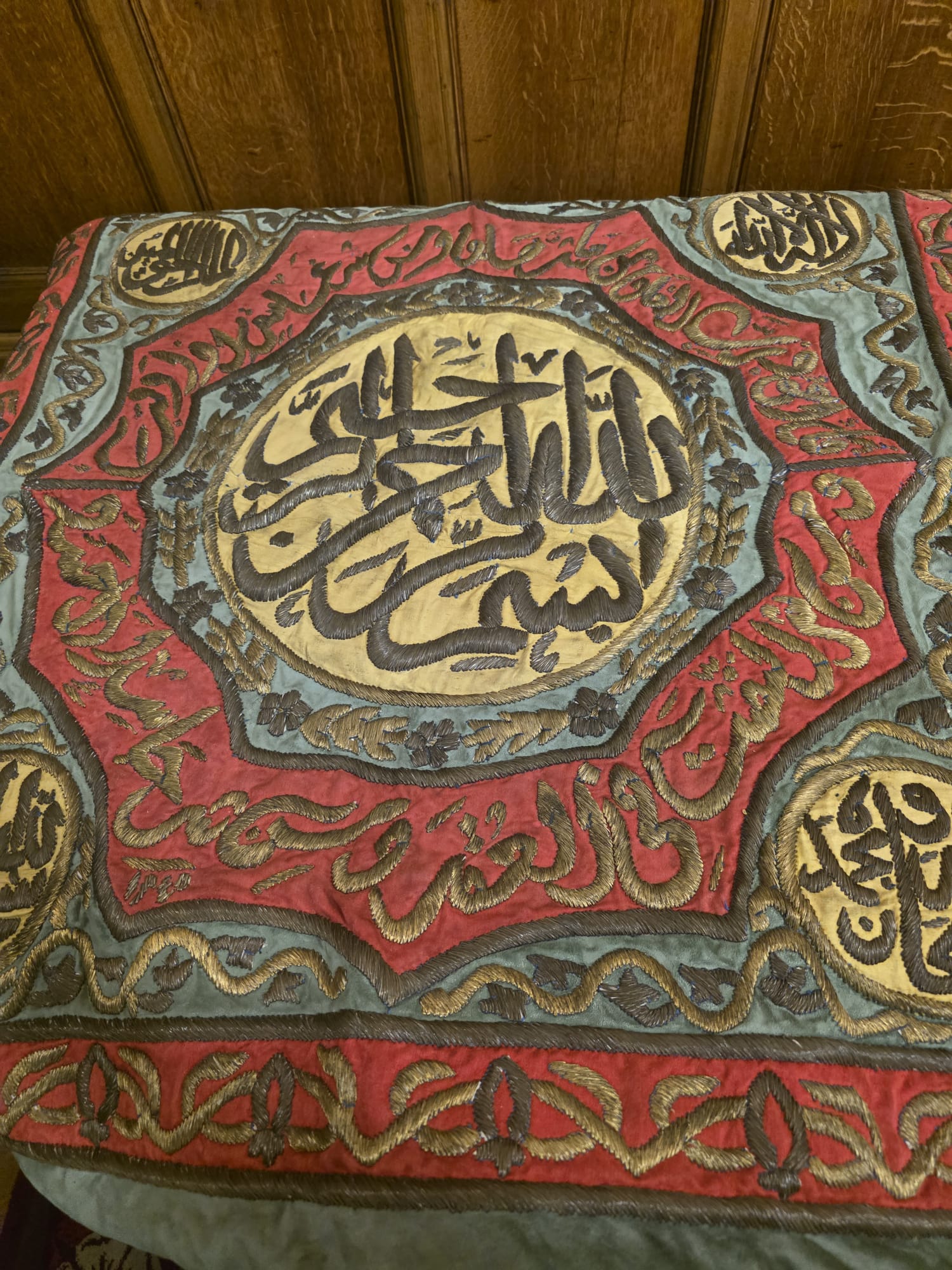
The Ottoman Qandeel dated 1240 Hijri (c. 1824–1825 CE) belongs to a period when the Ottoman Empire was ruled by Sultan Mahmud II (r. 1223–1255 Hijri / 1808–1839 CE), a ruler known for both reform and the continuation of long-standing religious and artistic traditions
This Qandeel is a beautiful and very old ceremonial textile, remaining firmly within the Ottoman devotional context. The main body has the appearance and feel of velvet, a textile valued for its depth, softness, and ability to hold rich colour. It was dyed entirely with natural dyes, following pre-industrial Islamic textile practices. The turquoise and blue tones are consistent with indigo, while the yellow areas were likely achieved using saffron or other plant-based yellow dyes, and the reds correspond closely to madder root, one of the most widely used natural red dyes in the Islamic world. The subtle greenish and turquoise shades appear to result from layered or mixed dye processes, such as indigo combined with yellow dyes, a common method in Ottoman textile production
The Qandeel is further distinguished by its North Arabic calligraphy, carefully executed and prominently featuring Surah al-Falaq, emphasizing themes of divine protection. Altogether, the harmony of colour, the depth of the velvet-like ground, and the disciplined calligraphy reflect the high level of craftsmanship and devotional intent characteristic of Ottoman sacred textiles in the early 13th century Hijri
Surah Al-Falaq (الفلق) – Chapter 113
Arabic:
بِسْمِ اللَّهِ الرَّحْمَـٰنِ الرَّحِيمِ
(BISMILLAHIR RAHMANI NIR RAHEEM ( CENTER)
قُلْ أَعُوذُ بِرَبِّ الْفَلَقِ
مِن شَرِّ مَا خَلَقَ
وَمِن شَرِّ غَاسِقٍ إِذَا وَقَبَ
(TOP SEMI CIRCLE RIGHT TO LEFT)
وَمِن شَرِّ النَّفَّاثَاتِ فِي الْعُقَدِ
وَمِن شَرِّ حَاسِدٍ إِذَا حَسَدَ
(BOTTOM SEMI CIRCLE RIGHT TO LEFT)
English Translation:
In the name of Allah, the Most Gracious, the Most Merciful.
Say, “I seek refuge in the Lord of the daybreak
From the evil of that which He created
And from the evil of darkness when it settles
And from the evil of those who blow on knots
And from the evil of an envier when he envies.”